
Trace Former Owners of Marion County Land
Start from the current deed or the Assessor card's book and page reference. The grantee in that instrument is your bridge to the prior grantor. Each step backward follows the same logic. The Marion County Clerk's online index does not publish its start year. You cannot assume how far back the web search reaches. Historical catalog ranges suggest where older books live. They say nothing about digitization or full online coverage.
| Source | Years It Covers | Where Held | What It Shows |
|---|---|---|---|
| Current County Clerk index | Online cutoff not stated | Marion County Clerk / land-record directory | Recent filed transfers and related instruments |
| Historic deed index | Catalog lists 1842-1968 | Archival catalog and Clerk inquiry | Finding aid for earlier grantor/grantee work |
| Land books and surveys | Catalog lists 1841-1900 series | Archives, catalog, or local history help | Taxpayer, tract, survey, and land clues |
| Plats and directories | Coverage varies by item | County Clerk and genealogy resources | Lot layout or an old street occupant |
A modern transfer begins with the County Clerk deed itself. Older chains need more planning. Use the catalog to pinpoint a volume or series, then ask whether it exists as a bound book, microfilm, or digital image, and where you can view it. A plat can clarify the lot, and a directory can place an occupant at an old address. Neither one proves title. Only a recorded deed does that.
Marion County Clerk Records for a Chain
The County Clerk's holdings cover far more than simple deeds. The list runs through deeds of trust, liens, and releases. It also includes assignments, agreements, affidavits, foreclosure trustee reports, and plats. Each type can explain a gap in your chain. A release may close out an old lien entry. A trustee report may document a forced sale. An affidavit may clear up a confusing land record. The live grantor and grantee search form, along with its online date range, is not documented. Confirm availability with the office. The Marion County land-record directory shows the named categories.
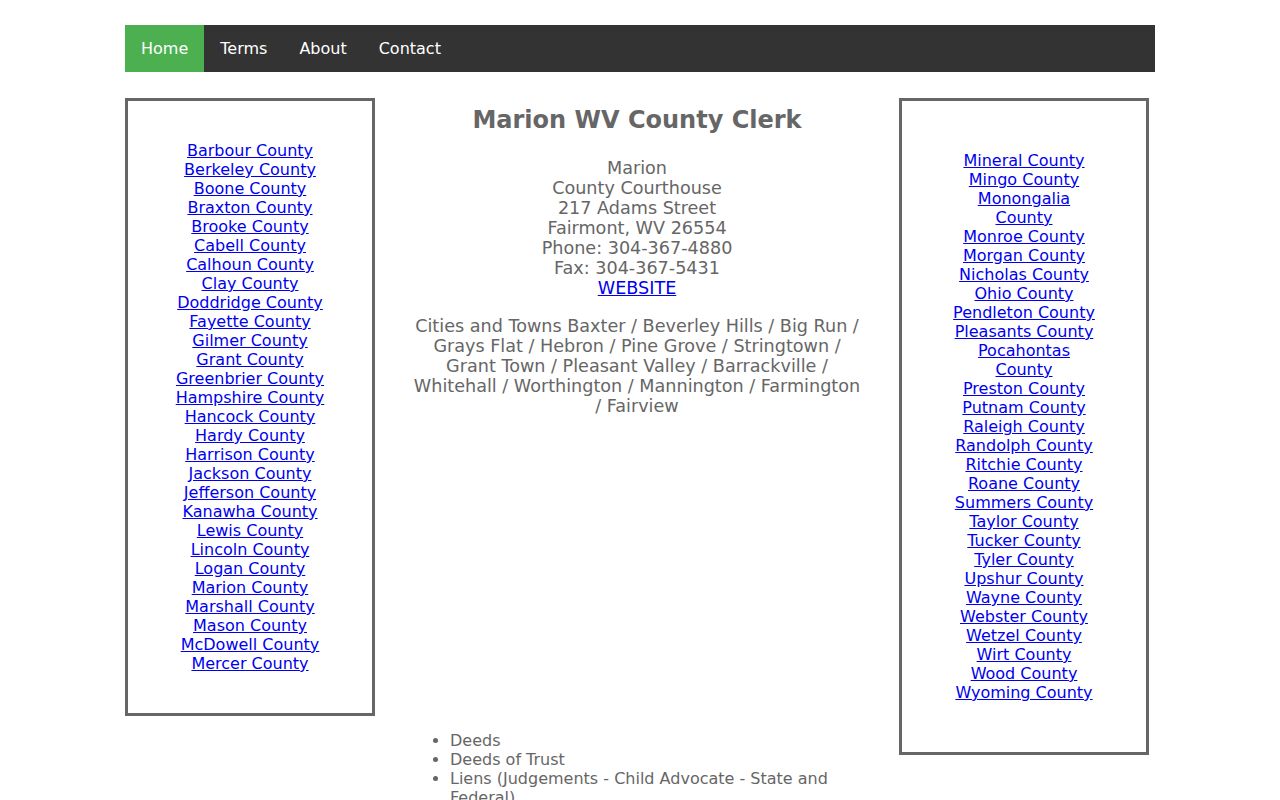
When the online search stops short of an earlier transfer, ask the Clerk directly. Staff can point you to the right index and book for a predecessor's name.
Marion County Catalog Dates and Online Limits
The catalog lists Marion County deeds beginning in 1842, with an index running through 1968. Those dates are gold for planning a search. They are not proof that the county's web index reaches either endpoint. The official pages do not state the live cutoff. They also omit the extent of image coverage and exact copy fees. Keep a catalog listing and an online record in separate mental notes. The historical land-record catalog gives a researcher a place to start. It helps when moving beyond a current instrument.
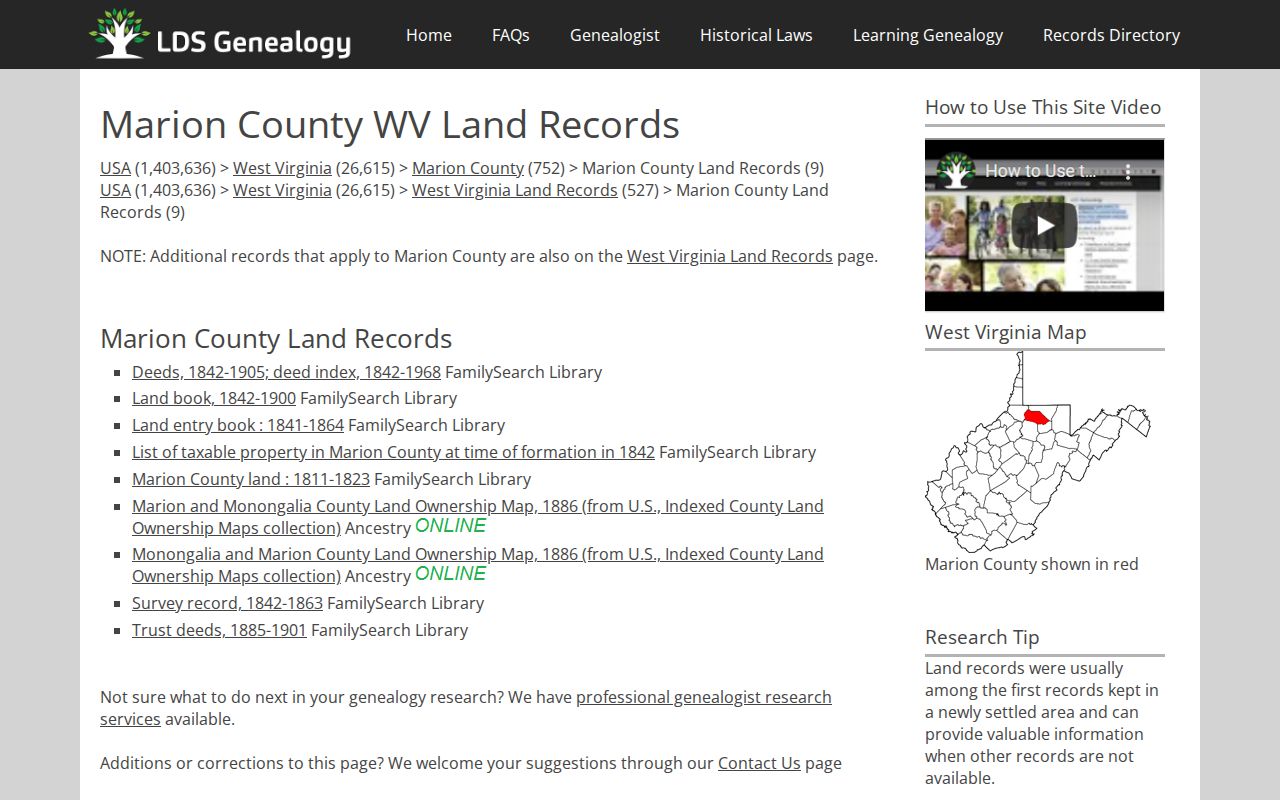
Treat the catalog range as a question for the archive or Clerk, not a promise. A specific volume may exist, yet its image may not be viewable from home.
Walk Back Through Marion County Deeds
Read the current conveyance and treat its grantor as the next earlier grantee. That flip powers the whole chain. At every step, compare the legal description, deed date, and recording reference. Check the spouse or co-grantee too. Watch for any change in acreage or lot and block. Handwritten indexes often use initials or odd spellings, so search name variants with patience.
- Identify the latest deed into the current grantee and copy its full legal description.
- Read the grantor and search that party as a grantee in the earlier period.
- Compare every deed’s lot, block, survey, acreage, names, and book/page reference.
- When the web index stops, use the historical catalog to request the next book or series.
- Grantor
- The party conveying a land interest.
- Grantee
- The party receiving that interest.
- Chain of title
- The ordered sequence of transfers and related instruments.
- Legal description
- The written land identity that can remain useful when street names change.
Marion County Genealogy Room Clues
A local genealogy room can carry clues that a deed search alone will miss. Holdings include early-1900s city directories, obituaries from 1982 forward, wills, cemetery material, county histories, maps, photographs, and yearbooks. There is also a West Virginia land-grant index. It reaches back to the early 1780s. Any of these might tie an old street number to a family or occupant. That gives a Marion County deed search another name. It also gives a date to test against the land records.
The Marion County genealogy resources description lists the types of local history holdings available.

Treat every directory entry or obituary as a lead, never a conclusion. Confirm title with a deed, probate file, assessor card, or recorded plat.
Probate in a Marion County Ownership Gap
If a former owner died and no deed follows, search for a personal representative’s deed or an heir conveyance in the County Clerk land record, then check Circuit Clerk probate files for appointments, wills, inventories, authority, and orders. The county-clerk instrument shows the land-facing document; a court file may explain the fiduciary authority behind it.
Use the parcel’s legal description to ensure that an estate document covers the same land. A will may identify an heir but not serve as the recorded conveyance that updates the public land record. Death certificates are restricted before the statutory 50-year period, subject to eligibility rules in W. Va. Code §16-5-27.
Marion County Streets, Plats, and Prior Names
Old Marion County deeds often carry street names. They also carry lot descriptions that no longer match today's address. Renaming, lot splits, mergers, and shifting acreage all muddy the trail. As you move backward, compare adjoining owners, survey references, and plat names at each step. The legal description bridges the chain when the parcel number or situs address changed. Fairmont's historic downtown, East Side, and older city blocks lean on lot-and-block descriptions. Rural tracts use metes and bounds. Treat these as search lenses, not confirmed subdivision registers. Request the recorded plat from the Clerk. The local history room's maps can then help you locate an older address. Its city directories can too.
Use Historical Marion County Materials for Context
The historic catalog for Marion County carries real depth. Deeds run from 1842 to 1905. Deed indexes reach from 1842 to 1968. Land books, land-entry books, surveys, and trust deeds fill in other nineteenth-century date ranges. The catalog dates tell you which volume to request once the online property records chain stops. They cannot promise the pages are scanned, searchable, or part of the current web index.
The county genealogy room adds context the deed books lack. Directories, obituaries, maps, and yearbooks sit there. A family name can point toward a parcel, and so can an old street reference. That is a lead, not proof. Every ownership step still needs a recorded deed, a probate record, or another instrument. Get it from the proper custodian.
An older chain may cite a land entry or a survey. It may not cite a modern parcel number. The catalog covers that. It lists Marion land-entry books from 1841 to 1864 and surveys from 1842 to 1863. A West Virginia land-grant index reaches back to the early 1780s. Treat a grant as a land-history clue. It does not prove a later private conveyance. An early-1900s directory or a family notice can still match a person to an older street name.
Streets get renumbered and tracts get subdivided. When that happens, trace the legal description across several deeds and plats. A current Marion County property search may surface an account number. That number never existed for a predecessor lot. Keep the old lot and block, the metes-and-bounds phrase, or both. Keep the recording book and page. Keep both parties' names too. If the indexed chain jumps, check whether an estate, a trust, a foreclosure trustee report, or a release sits under a different party or document category. Do that before concluding the public record is missing.
The archive also lists land books from 1842 to 1900 and trust deeds from 1885 to 1901. Trust deeds get their own volumes. A land-book entry can name the assessment-era owner attached to a tract. A deed of trust, or its later release, explains a recorded security interest. Neither source alone proves an unbroken title chain. Use the volume date to frame your request to the clerk or archive. Ask whether the item exists as a book, a catalog entry, or an image.
Old records often carry a relative's name. A directory or obituary can settle a spelling, a relationship, or a date. Keep that context separate from the conveyance itself. If the parcel passed through an estate, a will or probate file may name the successor. Estate files explain people, not transfers. Still, find the deed or other land instrument. It is what later placed the parcel in a new owner of record.
How Far Marion County Owner Records Reach
Marion County was established in 1842. The catalog material runs deep. It lists deeds from 1842 to 1905, deed indexes from 1842 to 1968, land books from 1842 to 1900, land-entry books from 1841 to 1864, and surveys from 1842 to 1863. Use them as a finding aid. They cannot carry the full chain, since the county publishes no notice of a courthouse fire or a destroyed record series, and the current online cutoff for Marion County property records remains unknown.
Lawful use. Use former-owner records for property diligence, house history, or estate research. Do not use the names or address trail to stalk, threaten, or harass a living person.