
Marion County Deed Records on File
Marion County deed records trace every recorded transfer of land. These run from simple sales to deeds of trust, liens, releases, and plats. The County Clerk keeps these instruments. Most searches start with the grantor and grantee names, then tie the result back to a parcel number or legal description. Older books may still live in a catalog or at the counter. A search Marion County property records by address approach works too, once you connect the street to the parcel. One caution applies everywhere. A deed index proves what was filed, not that title is clear or every interest has surfaced.
| Deed Type | What It Does | Common Use |
|---|---|---|
| Deed | Instrument conveying an interest in land | Trace the named grantor and grantee |
| Personal representative’s deed | Estate or fiduciary transfer | Check the probate file for authority |
| Deed of trust | Recorded security instrument tied to financing | Search for later assignment and release |
| Trustee’s report of sale | Recorded report of a foreclosure sale | Compare with court and tax records |
| Plat map | Recorded drawing of lots, streets, or a subdivision | Match lot and block to the legal description |
Keep expectations realistic. A deed transfers a stated interest, but it does not list every lien or settle a boundary dispute on its own. After finding one instrument, search the same owner as grantor for anything filed later, and check whether a deed of trust has a matching assignment or release. The Clerk's category page shows which record classes exist. It does not publish the online search fields, image rules, or fees, so ask the office directly for those details before planning a full deed records search.
Marion County Recorded Instrument Categories
The County Clerk's directory reaches well beyond ordinary sales deeds. Deeds of trust, state and federal liens, judgments, and releases all appear as named classes. So do assignments, agreements, affidavits, cemetery deeds, church-trustee records, foreclosure trustee reports, and plat maps. Oil, gas, mineral, easement, and right-of-way language can hide inside a related instrument. That instrument may not be a deed at all. Treat the category list as a map of the Clerk's holdings, not a finish line. The official Marion County land-record categories page displays this directory of instrument classes. It is not a live grantor-grantee search form. For actual index fields, go through the Clerk's own search tools. The same tools cover the start year of the online deed records.
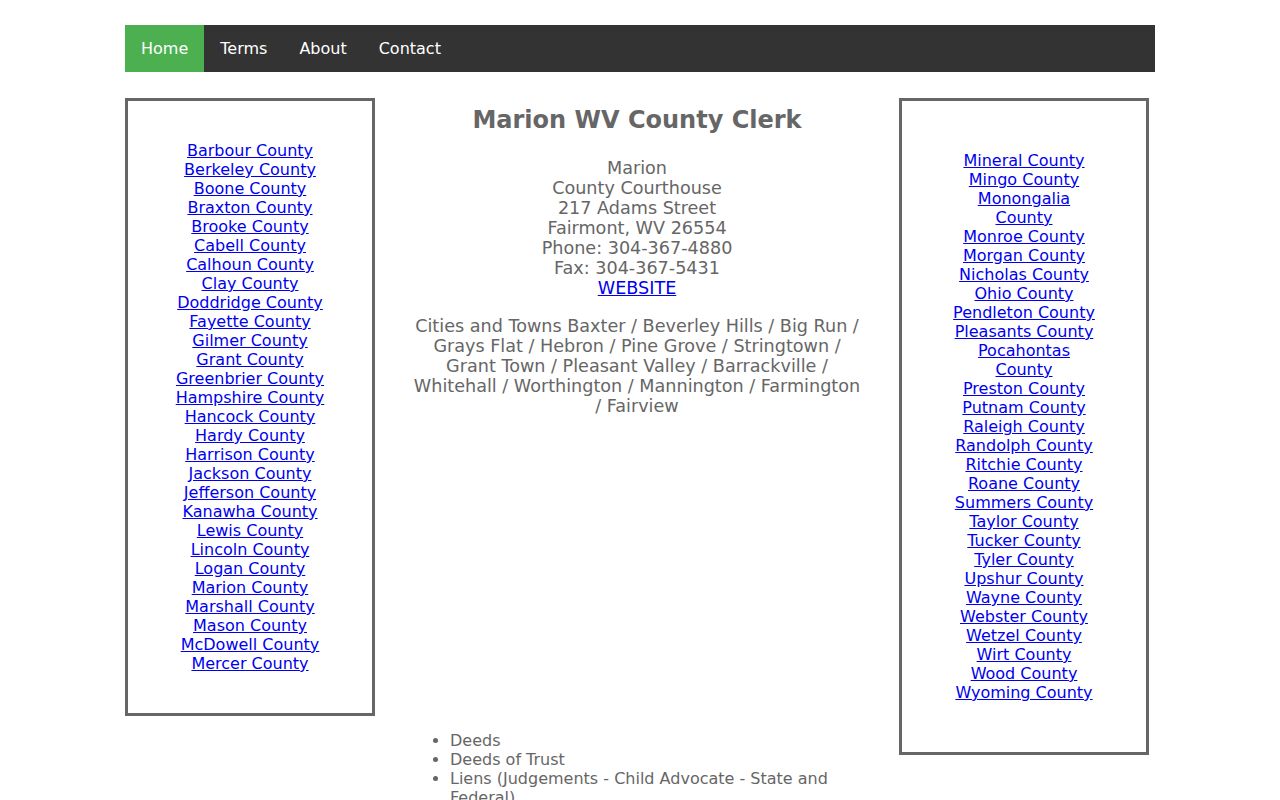
When a category label is unclear, bring the parcel account, the party names, the legal description, and an approximate date to the Clerk instead of guessing which instrument type was used.
Historic Marion County Deed Books
Catalog entries point to deep Marion County archives. Deeds run from 1842 to 1905. Deed indexes reach from 1842 to 1968. Land books cover 1842 to 1900, entry books 1841 to 1864, surveys 1842 to 1863, and trust deeds 1885 to 1901. These are archival ranges. They are not a promise that the live Clerk index reaches back that far. Still, they tell you which series to request. The Marion County historical land-record listing helps identify those series at a glance. Access depends on the catalog item and where it sits. A book reference, film number, or plat title is a lead. The Clerk or an archive can confirm what you will actually receive.
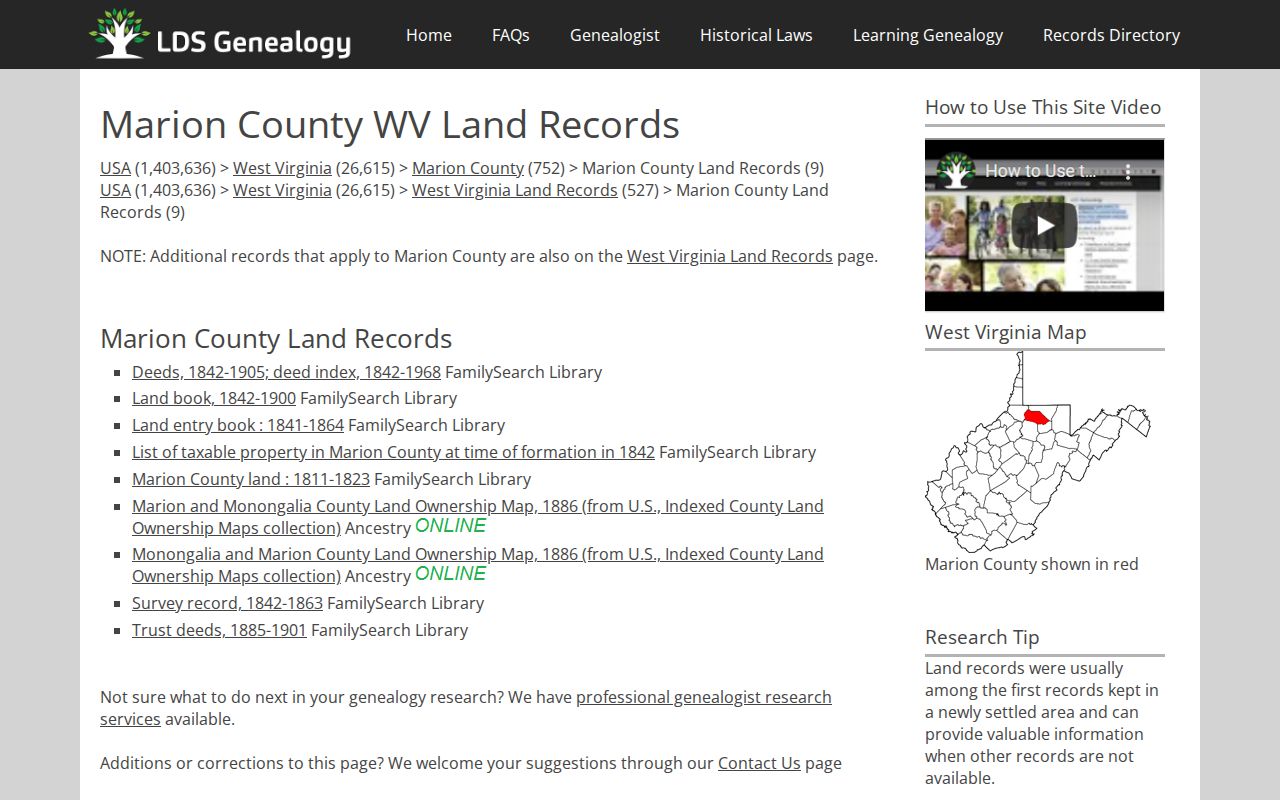
For house history, lay an older deed's lot description or metes and bounds beside a later plat and the modern tax parcel to confirm you are tracking the same piece of ground.
Follow Marion County Grantors and Grantees
Chain building starts on the Assessor card. Pull the current owner of record and the deed book and page listed there. In the County Clerk index, find the latest deed into that owner as grantee. Note the grantor and legal description. Then search that grantor as a grantee in the earlier period. Repeat the steps to walk backward through the deed records one transfer at a time. The method rests on party names and land descriptions. It works even when a street address alone fails.
- Use the Assessor deed reference to identify the latest recorded transfer into the current owner.
- Copy the grantor, grantee, instrument date, recording reference, and full legal description.
- Search the prior grantor as a grantee, matching the description and any co-owner or spouse.
- Continue through book references, then ask the Clerk about older volumes when the online range ends.
- Grantor
- The person or entity conveying a stated land interest.
- Grantee
- The person or entity receiving that interest.
- Chain of title
- The ordered set of instruments used to trace transfers over time.
- Book and page
- A reference to a recorded volume and page; the live county index’s identifier fields were not captured.
Estate Transfers in Marion County Deeds
Property leaves an assessment roll for many reasons. A personal representative's deed, an heir's conveyance, a probate order, a joint-survivorship transfer, or a trustee sale can each move a parcel to a new owner of record. The land-facing instrument goes to the County Clerk. Probate appointments, wills, inventories, and orders live in Circuit Clerk records instead. When a chain breaks at an owner's death, search both offices. Check under the decedent, the estate, the executor or administrator, and any likely heirs. Match the legal description. Be sure the estate filing covers the parcel you are chasing. A will may explain the transfer. Yet it is often not the instrument that updates the public land record itself.
Marion County Deed of Trust Releases
Deeds of trust, assignments, liens, and releases each form a category of their own. They all sit within Marion County property records. A deed of trust names a lender and trustee. An assignment moves the lender's interest elsewhere. A release or satisfaction records the discharge in public. Never treat the latest deed reference on the assessor card as a complete encumbrance search. It is not one. For a parcel review, search the current owner as grantor from the latest deed forward. Then check the lender and trustee names for matching releases. A court file can add a foreclosure, judgment, or lis pendens to the picture. The Clerk's online search fields and image fees are not published. So confirm the index method with the office before relying on it.
Older Marion County Deed Requests
Digital search results have their limits. When a Marion County deed does not surface online, the path runs from the County Clerk counter to a written request to the custodian, then to the local genealogy room and archival catalog material. The County Clerk directory names Julie Kincaid and gives 219 Adams Street, P.O. Box 1267, Fairmont, WV 26555, with telephone 304-367-5445. A separate land-record listing showed a different street number and phone. Confirm current counter details through the official directory before making the trip.
A written request can also go out under the West Virginia FOIA, W. Va. Code §29B-1-3. That request should identify the parcel, the parties, the deed type, the date span, the legal description, and the preferred format. The five-day response maximum excludes Saturdays, Sundays, and legal holidays. Fees may cover actual reproduction cost. Note: state law does not make the Secretary of State the custodian of county deed books.
Give the Clerk a Book, Page, or Party Name
A precise Marion County deed request needs an anchor. Start with the deed book and page from the Assessor card, a grantor and grantee pair, or the full legal description. A street address helps as a locator. It fails, though, when an older document predates current addressing. A subdivision name, lot and block, or metes-and-bounds phrase often ties the tax parcel to the recorded instrument. Nothing else works as well. The county's public land-record page sorts instruments into categories. These include deeds, deeds of trust, liens, releases, plats, assignments, agreements, affidavits, and foreclosure trustee reports. Pick the category matching your event. Then confirm the names and legal description in the result. The page does not state online image coverage, result limits, fees, or the years indexed. So ask the Clerk whether the instrument is viewable online or needs an in-person or written request.
Not every instrument beside a property records a sale. A deed records a conveyance. A deed of trust usually secures an obligation. A release documents that a recorded interest was discharged, and a plat lays out lots or streets. An assignment can shift an interest in a recorded instrument without conveying the parcel underneath. Read the parties, the date, any consideration language, and the legal description before treating a search hit as an ownership change. For a full chain of title, work backward. Begin at the newest deed reference on the Assessor card and search the receiving owner as a grantee. That instrument's prior owner becomes your next grantor. Repeat the loop, cross-checking the legal description each pass. Preserve initials, entity suffixes, and former names, and test each version separately. A will or probate document can explain an estate gap. But the recorded deed or other land instrument still has to be found.
Ask for a copy carefully. Say whether you need the recorded image for research or a certified copy for a formal transaction. Request a quote for reproduction or certification cost. The published county information lists a public counter and a contact route. It offers no verified online image guarantee and no current copy-price table. A written request should spell out the instrument type, parties, book and page, property description, and approximate recording date. Those details let staff separate similar names. One deed is rarely the whole answer. A release, assignment, deed of trust, probate filing, or trustee report can affect an interest without functioning as an ordinary sale. Compare names, legal descriptions, and recording order across every relevant result. If an instrument is missing from the live index, ask whether an older paper index or an archival catalog item comes next.
Marion County's archival catalog covers more than one date span, so name the series you need. The choices include deeds, deed indexes, land books, entries, surveys, and trust deeds. A deed recorded before 1906 may sit in the catalog's 1842 to 1905 deed group. The deed index range runs through 1968. Those catalog limits guide a search but say nothing about current web access. Ask the Clerk or the archive how a specific volume can be consulted.
Request a Marion County Deed Copy
The Clerk's public land-record page lists categories and little else. It states no live index start year, no image availability, and no copy fee. Bring or include the parcel account. Bring the exact deed book and page. Bring grantor and grantee. Bring the legal description and the likely recording period. Ask whether the office provides an uncertified copy or a certified one. Also ask how mail requests are handled and what reproduction or certification cost applies.
Recorded, not guaranteed. An index confirms that an instrument was recorded, not that it is the full title history or that no unrecorded claim exists. Use a title professional when a title opinion is needed.